Voice & speech
Augmentative and Alternative Communication (AAC)
Low-tech and high-tech AAC - assessment, trial and long-term support tailored to each person.
What it is
What is Augmentative and Alternative Communication?
Augmentative and Alternative Communication (AAC) is the umbrella term for any tool, strategy or system that supports or replaces spoken communication. AAC ranges from no-tech options such as gesture, key-word signing and facial expression, through low-tech systems like communication books, PECS and alphabet boards, to high-tech speech-generating devices and apps such as Proloquo2Go, Grid, TouchChat, LAMP Words for Life and Snap Core First - used on iPads, dedicated devices or eye-gaze systems.
AAC supports adults and children whose speech is temporarily or permanently unreliable - including people with motor neurone disease (MND), aphasia after stroke, cerebral palsy, learning disabilities, autism, apraxia, head and neck cancer, and progressive neurological conditions. Decades of research confirm that AAC does not slow the development of speech - it supports language, reduces frustration, and gives people access to their own voice. The goal is always the same: reliable, authentic communication, in the person's own words.
Your experience
What you might be experiencing
You - or someone you love - may be finding that speech no longer keeps up with what needs to be said. That might mean words that come out garbled after a stroke, sentences that vanish mid-thought, breath that runs out before the message does, or speech that used to be reliable slowly becoming harder to understand. For a child who is not yet speaking, or for whom speech is unlikely to become a reliable first language, it may look like frustration, withdrawal, or a small handful of gestures trying to carry the weight of everything they want to say.
Families often describe a difficult in-between period: the person clearly has plenty to say, but the route out is blocked. Conversations get shorter, avoided, or reduced to yes/no. Choices are made for the person rather than by them. AAC is what unblocks the route - not a last resort, and not a replacement of the person, but a set of tools that carry the message when the voice can't. When it is well-matched, well-taught and well-supported at home, work or school, AAC gives people back the ability to say what they mean, in their own words, on their own timing.
The evidence
How speech therapy helps
The evidence base for AAC is now very strong. A landmark meta-analysis by Millar, Light & Schlosser (2006) - followed by multiple systematic reviews - concluded that AAC intervention does not inhibit speech development; in fact, most children showed either maintained or improved speech production. More recent reviews (e.g. Ganz et al., 2012; Logan et al., 2017) confirm meaningful gains in communication, language, and behaviour across autistic and non-speaking children.
For adults with acquired conditions, AAC is a well-established part of care in aphasia, MND, Parkinson's, dementia and post-stroke rehabilitation. Systematic reviews (Beukelman, Fager & Nordness, 2011) show that AAC use is associated with reduced communication breakdown, improved quality of life, greater participation in decision-making, and better outcomes when introduced early - long before speech becomes unreliable. Speech and language therapy is essential for good AAC: assessment, personalisation, training, and integration into daily life all significantly affect whether AAC is genuinely used.
~1%
of the UK population would benefit from some form of AAC
Communication Matters, 2013
89%
of studies show AAC maintains or improves spoken language
Millar, Light & Schlosser meta-analysis, 2006
Early
AAC introduction linked with better outcomes in MND and progressive conditions
Beukelman et al., 2011
Any age
AAC is effective from early childhood through end-of-life care
RCSLT AAC clinical guidance
Your AAC pathway
Treatment structure
AAC is a journey rather than a one-off decision. Our work is laid out like a communication grid - six connected tiles that we return to and refine as needs, technology and life change.
TILE 01
Meet
A warm first conversation to understand the person, their communication and what matters most.
TILE 02
Assess
Comprehensive assessment of language, motor, sensory and cognitive skills to inform system choice.
TILE 03
Trial
Trial low-tech and high-tech options in real settings - no commitment, no wrong answers.
TILE 04
Personalise
Set up vocabulary, layout, access method and voice to fit the person, not the other way around.
TILE 05
Embed
Coach family, school or care team so AAC is modelled and available across every day, every setting.
TILE 06
Review
Regular reviews as skills, technology, health and life all change - AAC grows with the person.
Your appointment
What sessions look like with Claire
AAC sessions are hands-on and completely person-centred. We spend time with real vocabulary, real devices and real conversations - not test protocols. For children this often means play, favourite books, snacks, and modelled use of AAC by every adult in the room. For adults with acquired conditions it often means working with photographs, real-life topics, care needs and personal stories - so the system reflects the person, not a generic template.
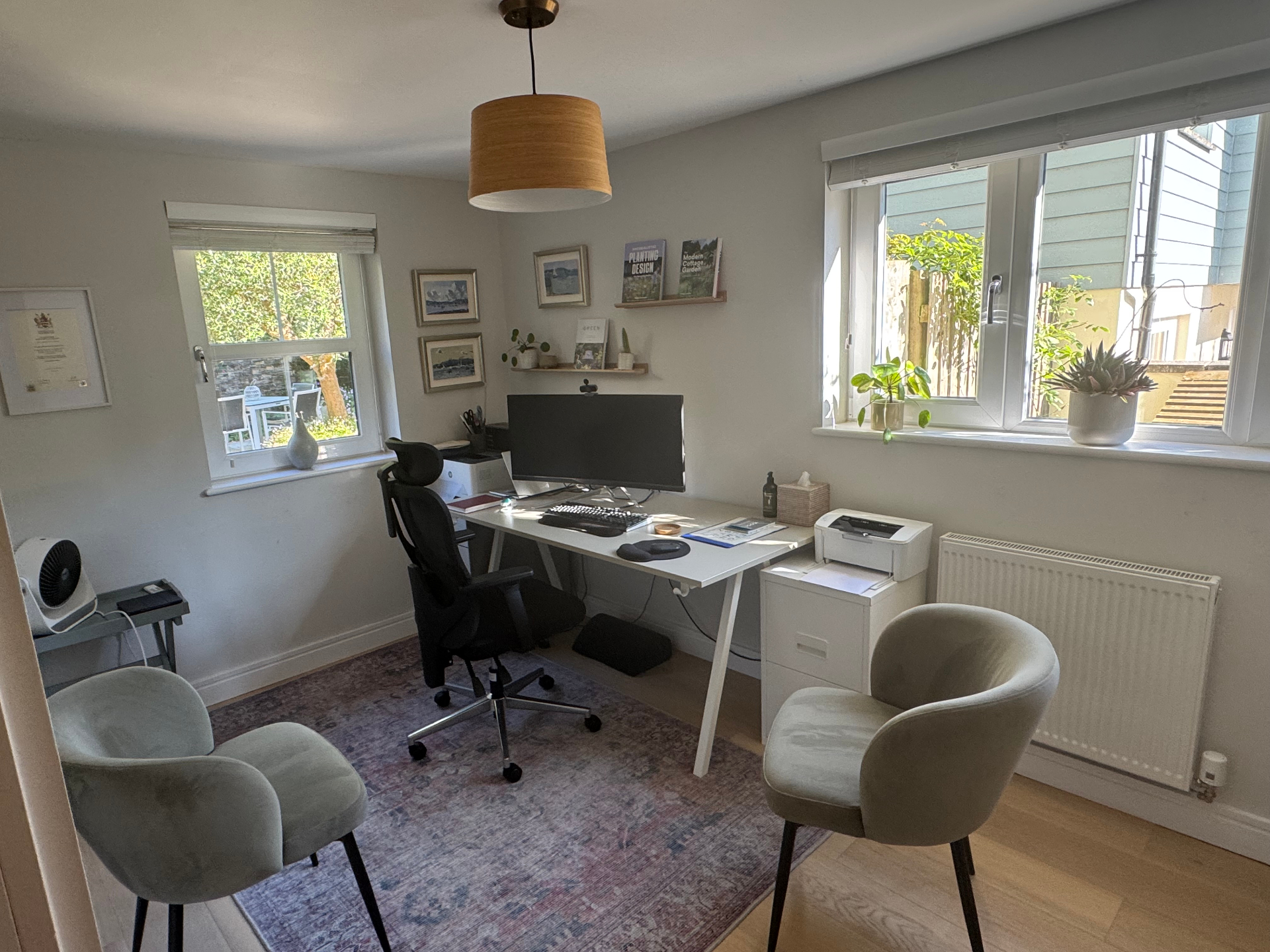
Sessions can take place at Claire's home office, in your own home, in schools, care homes or hospital, or online. Where communication aids are being funded through NHS specialist services, Claire is happy to work alongside your NHS team; where families or care providers are buying privately, she can advise on the right system, trial it, and personalise it fully.
Continuing your progress
What happens after the programme?
AAC is rarely a one-off intervention. Successful AAC is embedded, modelled, revisited and updated - which is why the review stage matters as much as the initial set-up. Many families and care teams choose ongoing periodic sessions to add vocabulary, refresh training for new staff or carers, adjust access as motor skills change, or troubleshoot software updates.
You'll leave each block with clear next steps, training resources for the people around the AAC user, and a schedule for review - always paced around the person's life, not the technology. Claire regularly liaises with schools, care providers, NHS AAC hubs, occupational therapists, physiotherapists and consultants to keep AAC working across every setting.
Voices from clients
Feedback from sessions
“Claire is imaginative and has great empathy. Her focus and energy are remarkable as is her knowledge of appropriate technology. I unreservedly recommend her - I am sure she would find a way to help anyone with speech problems.”
J.C.
“She has a remarkable ability to identify practical, meaningful communication strategies that translate into real improvements in everyday life. Whether supporting someone following a traumatic brain injury, working with families, or guiding support workers, she brings professionalism, compassion and creativity to every aspect of her work.”
Emily Denny
Further reading
Additional Information
Where else to find information
Communication Matters (the UK's leading AAC organisation) and the Ace Centre both provide trusted, up-to-date information about AAC, funding routes and training for families and professionals.
Working alongside NHS AAC services
For people who meet NHS specialised AAC criteria (typically complex, long-term needs), Claire is happy to work alongside the regional NHS AAC hub - supporting local implementation, training and everyday use of the system between reviews.
Interested in AAC assessment or support?
Get in touch to arrange an initial conversation - whether you're exploring AAC for the first time or refining a system that isn't quite working.
Frequently asked questions