Voice & speech
Adult Stammering Therapy
Personalised, non-judgmental therapy for adults who stammer - at work, at home and everywhere in between.
Understanding adult stammering
What is Adult Stammering Therapy?
Around 1% of adults - roughly 700,000 people in the UK - live with a stammer. Stammering is a neurodevelopmental difference in the brain networks that plan and coordinate speech. It can look like repeating sounds or syllables (“c-c-can I…”), stretching sounds (“ssssorry”), or getting completely “blocked” with no sound coming out at all - often with visible tension, avoidance of certain words, or long, silent workarounds. Most adults who stammer have done so since childhood; a smaller number develop stammering later, after neurological, psychological or medical events.
Adult stammering therapy is not about “curing” stammering or teaching you to hide it. It is about giving you real choice - the ability to speak the way you want to, when you want to, in the situations that matter most. Modern, evidence-based approaches combine practical speech techniques (such as easy-onset, gentle contact and rate work) with cognitive and acceptance-based work (ACT, CBT, avoidance-reduction therapy) to reduce the physical struggle, loosen the fear of talking, and re-open work, relationships and everyday life.
Your experience
What you might be experiencing
Living as an adult who stammers is often much more than the moments of dysfluency themselves. You may have spent years quietly rehearsing sentences before saying them, swapping the word you wanted for one you could say, avoiding introductions, phone calls, meetings, dating, or ordering the thing you actually wanted in a café. Many adults describe feeling exhausted by the mental gymnastics of speaking - the constant scanning ahead for “difficult” words, the flush of adrenaline when a name or a number is required, the aftermath of replaying a conversation that didn't go the way you wanted.
At work, stammering can quietly shape which jobs you apply for, how visible you are in meetings, and whether you volunteer to present. In personal life, it can affect friendships, family gatherings, parenting, and how confident you feel walking into a new room. Many adults who stammer have never met anyone else who does - and many have never had therapy that felt genuinely helpful. If any of this feels familiar, you are not alone, and none of it is a personal failing. Stammering is a neurological difference, not a flaw of character, and there is meaningful, evidence-based support available at any age.
The evidence
How speech therapy helps
For adults, the best-supported approaches combine speech restructuring / fluency shaping techniques (such as the Camperdown Programme, developed at the Australian Stuttering Research Centre) with cognitive and acceptance-based work. Randomised trials of Camperdown (O'Brian et al., 2003; Cocomazzo et al., 2012) show significant, durable reductions in stammering frequency alongside gains in communication confidence.
A growing body of evidence supports Acceptance and Commitment Therapy (ACT) and avoidance-reduction therapy for adults who stammer. Studies (Beilby et al., 2012; Boyle, 2011) report reduced avoidance, lower anxiety and improved quality of life - even when overt stammering itself doesn't change dramatically. Modern practice increasingly blends techniques: some adults choose to work on speech patterns, some on openness and acceptance, and many on both. The goal is a life that is not shaped around avoiding talking.
~1%
of adults worldwide live with a stammer
Yairi & Ambrose, 2013
~50%
reduction in stammered syllables reported after Camperdown Programme
O'Brian et al., 2003
3–4×
higher rates of social anxiety in adults who stammer than in the general population
Iverach & Rapee, 2014
Any age
adult stammering therapy is effective at any stage of adulthood
RCSLT guidance
Above & below the surface
Treatment structure
Stammering is often described as an iceberg - the visible speech sits above the waterline, and the feelings, thoughts and avoidance sit below. Our work moves gently between the two.
Above the surface
STAGE 01
Understanding your speech
A careful look at how, when and where you stammer - and what feels most in your way day to day.
STAGE 02
Practical speech tools
Techniques such as easy onset, gentle contact and rate work - used flexibly, never as a mask.
Below the surface
STAGE 03
Reducing avoidance
Gentle work to unwind the word swaps, silences and situations you've been steering around.
STAGE 04
Confidence & identity
ACT / CBT-informed work on the thoughts, feelings and self-story that surround stammering - so life gets bigger.
Your appointment
What sessions look like with Claire
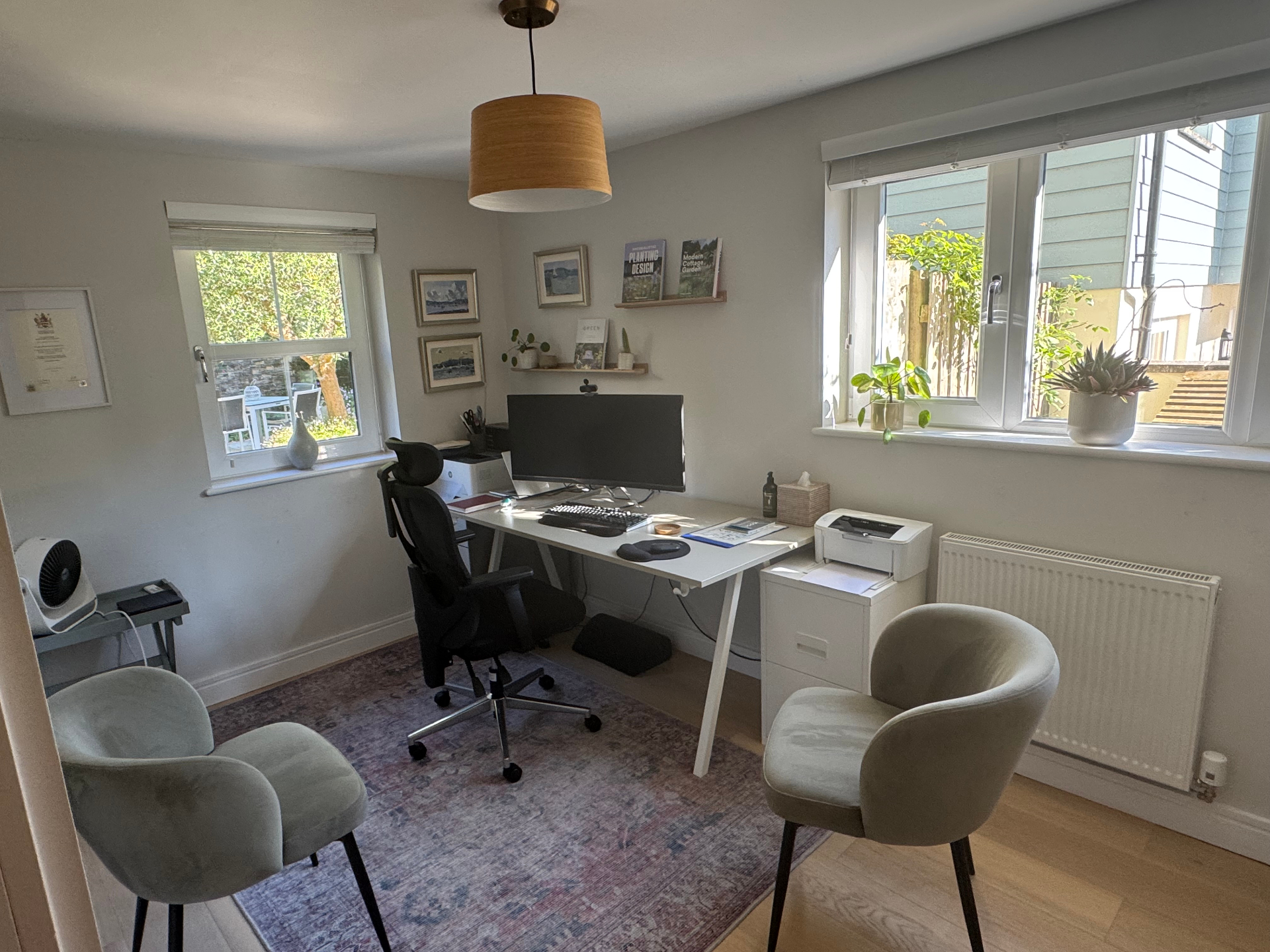
Sessions take place in a calm, private home office (or online, if you'd prefer). They are one-to-one, typically 45–60 minutes, and completely led by what you want. Some sessions focus on practical speech work; some on the situations you've been avoiding; some on the thoughts and feelings that show up around talking. There is no pressure to be “fluent” and no expectation of a particular outcome - the focus is on giving you more choice.
Between sessions you'll have small, realistic tasks to try in the real world - sometimes speech practice, sometimes a conversation you've been putting off, sometimes just noticing what happens. Everything is discussed together, adjusted as we go, and paced around your life and work.
Continuing your progress
What happens after the programme?
Many adults leave a block of therapy with a very different relationship to their stammer. That might mean fewer stuck moments, less physical struggle, or less time spent avoiding the phone, meetings or social situations. Just as often it means the same amount of stammering - but far less fear around it, and far more of a life happening around it.
You'll finish with a clear personal toolkit - the techniques that worked for you, the ideas that felt useful, and a plan for the situations that still feel challenging. Some clients return for occasional top-up sessions around big life events - a new job, a wedding speech, an interview - and Claire is always happy to signpost to peer groups such as STAMMA local meets, where meeting other adults who stammer is often a turning point in itself.
Voices from clients
Feedback from sessions
“Claire was warm, reassuring and patient and together they explored a range of techniques for her to practice and draw on when necessary. I would (and indeed have!) recommend her to anyone who is looking for help with their stammering.”
C.O.
“Claire combines exceptional clinical knowledge with a warm, approachable manner that enables her to build genuine therapeutic relationships, even with individuals who may initially be reluctant to engage.”
Emily Denny
Further reading
Additional Information
Where else to find information
STAMMA (the British Stammering Association) and the Royal College of Speech and Language Therapists offer trusted information, adult peer support networks, and workplace resources.
Support at work
Stammering is a recognised disability under the Equality Act 2010. Claire can support you with workplace conversations, reasonable adjustments, presentation and interview preparation, and signpost to STAMMA's workplace resources.
Interested in starting adult stammering therapy?
Get in touch to arrange a no-pressure initial conversation - no need for a referral, and no expectation that you'll commit to a full block of therapy from the start.
Frequently asked questions