Neurological care
Neurological Rehabilitation - Stroke & TBI
Rehabilitation for communication and swallowing after stroke or traumatic brain injury.
Acquired brain injury
What are Stroke & TBI?
A stroke happens when the blood supply to part of the brain is interrupted, either by a blockage (ischaemic stroke) or a bleed (haemorrhagic stroke). A traumatic brain injury (TBI) occurs when a sudden impact, fall, accident or other trauma damages the brain. Both are forms of acquired brain injury - they change the way the brain processes language, speech, cognition and swallowing, often with little warning. The effects are as individual as the person affected, but commonly include aphasia (difficulty understanding or using language), dysarthria (slurred or weak speech), apraxia of speech (difficulty planning speech movements), and cognitive-communication difficulties such as problems with memory, attention, word-finding or following conversations. Swallowing can also be affected (dysphagia).
In the UK, around 100,000 people have strokes each year, and traumatic brain injury affects an estimated 1 in 200 people annually. The brain has a remarkable capacity to adapt and rewire after injury, especially when rehabilitation begins early and is tailored to the person's goals, interests and everyday life. Speech and language therapy plays a central role in this recovery, helping people regain confidence, reconnect with family and friends, return to work or study, and take part in the activities that matter to them. Whether you are in the early days after a hospital discharge or many months - even years - along, specialist therapy can still make a meaningful difference.
How therapy can help
Areas we may work on together
- Understanding & using language (aphasia)
- Speech clarity & voice (dysarthria)
- Swallowing safety & comfort (dysphagia)
- Memory, attention & conversation skills
By the numbers
Stroke & TBI in the UK
Sources: Stroke Association; NICE head injury guidance (NG232); House of Commons Library.
Understanding the terms
Aphasia, dysarthria & dysphagia
These three conditions are commonly seen after stroke or brain injury. Each affects a different aspect of communication or swallowing, and therapy is tailored to the individual's specific needs.
Aphasia
Aphasia is a language disorder that arises when a stroke or brain injury damages the areas of the brain responsible for understanding and producing language. It can affect speaking, listening, reading and writing to varying degrees, and it is important to remember that it is not a reflection of intelligence. Some people may know exactly what they want to say but struggle to find the right words; others may find it hard to follow longer conversations, read familiar text, or write a message. There are different types of aphasia, including expressive, receptive and anomic forms, each with its own pattern of strengths and difficulties. Therapy is highly individual and may include word-finding exercises, supported conversation techniques, reading and writing practice, and strategies to help family members communicate more easily. The goal is to rebuild language pathways where possible and develop practical, confidence-building approaches for everyday life.
Dysarthria
Dysarthria is a motor speech disorder caused by weakness, slowness or poor coordination of the muscles used for speaking. These include the lips, tongue, jaw, vocal folds and the muscles that control breathing. After a stroke or brain injury, speech may sound slurred, mumbled, slow, quiet or nasal, and the person's voice may sound hoarse, breathy or strained. Crucially, the person knows what they want to say; the difficulty lies in the physical production of speech. Therapy focuses on improving the strength, range, speed and coordination of speech muscles, alongside breath support, posture, voice quality and the pacing of conversation. Techniques may include work on articulation, clear speech strategies, use of volume and emphasis, and ways to make speech more consistent in everyday settings such as phone calls or social gatherings.
Dysphagia
Dysphagia is a swallowing difficulty that can develop after a stroke or brain injury when the muscles and nerves involved in swallowing are affected. It can occur at any stage of the swallow, from taking food or drink into the mouth, through the throat and into the oesophagus. Common signs include coughing or choking during meals, a wet or gurgly voice, a feeling that food is sticking, repeated chest infections, weight loss or avoiding eating and drinking because it feels unsafe. Dysphagia can have a significant impact on nutrition, hydration, enjoyment of food and overall wellbeing. Speech and language therapy assessment looks closely at the safety and efficiency of the swallow and may include personalised exercises, advice on textures and consistencies, swallowing strategies, positioning guidance and liaison with dietitians and medical teams. The aim is to make eating and drinking as safe, comfortable and pleasurable as possible.
Thinking & communication
Cognitive-communication changes after stroke & brain injury
Not every communication difficulty after a stroke or brain injury is a language problem. Communication also depends on the thinking skills underneath it - attention, memory, processing speed, reasoning, executive function (planning, organising and self-monitoring) and social cognition. When those are affected, the words may still be there, but organising a story, staying on topic, following a busy conversation, reading a room or remembering what was just said can become genuinely effortful.
These changes are common - reported in up to 75–100% of people with moderate to severe traumatic brain injury and in around half of right-hemisphere stroke survivors. People often describe their thinking as slower, foggier or harder to hold together; families often notice interrupting, difficulty picking up humour or facial expressions, or a shorter fuse when tired. Fatigue makes all of it harder, and by the end of the day even a short chat can feel exhausting.
Therapy for cognitive-communication difficulties is practical and personalised, and draws on international evidence-based frameworks including the INCOG 2.0 guidelines for traumatic brain injury and the Cicerone evidence-based cognitive rehabilitation recommendations. Rather than abstract exercises, we rebuild the everyday skills that matter most to you - holding a conversation with grandchildren, returning to work, chairing a meeting, managing appointments and correspondence, or simply feeling like yourself again.
What this work looks like
- Metacognitive strategy training - noticing, planning and checking your own communication, then applying it to real tasks.
- Attention and processing work built into conversation, reading and listening rather than isolated drills.
- External aids that actually get used: diaries, phone reminders, checklists, structured note-taking and message templates.
- Social communication practice - turn-taking, topic maintenance, reading tone and repairing misunderstandings.
- Fatigue and pacing strategies, so communication energy is spent where it matters most.
- Coaching for family, carers and colleagues, so the environment supports you rather than working against you.
Your experience
What you might be experiencing
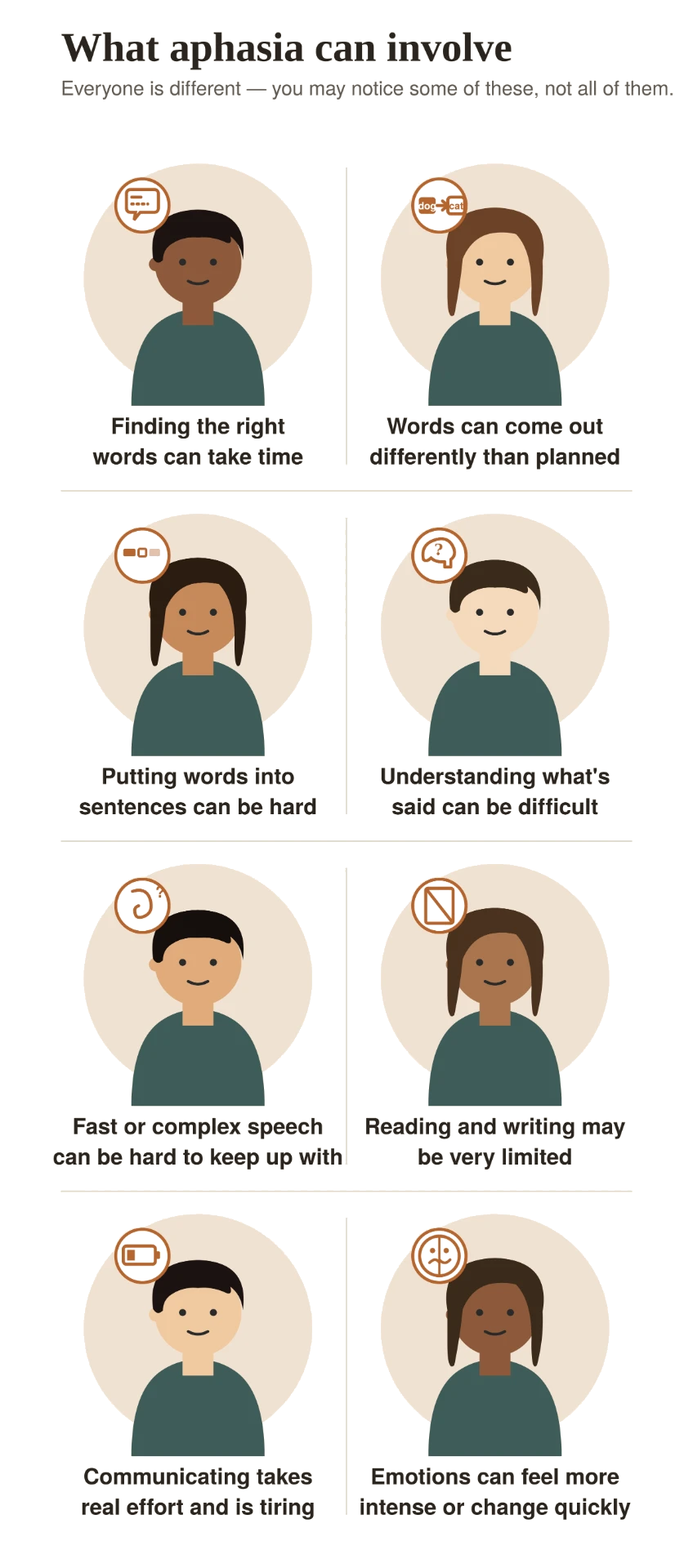
After a stroke or traumatic brain injury, communication can feel unfamiliar and frustrating. You may find yourself searching for everyday words, struggling to follow conversations, or noticing that your speech sounds slurred or weaker than before. Some people find it hard to read, write, or understand what others are saying. You might also experience changes to your voice, a softer or less reliable cough, or difficulty swallowing safely. These changes are common, but they can be worrying - especially when they affect the simple interactions that once felt effortless.
Beyond the physical symptoms, many people notice fatigue, memory lapses, or difficulty concentrating for any length of time. Social situations, phone calls, or returning to work can feel exhausting, and it is natural to feel less confident or more isolated as a result. Family and friends may also be adjusting to a changed communication dynamic. The good news is that the brain can continue to adapt and rewire long after injury, and with the right support, many people make meaningful gains in speech, language, swallowing and confidence. Specialist therapy can help you rebuild the skills that matter most and reconnect with the people and activities you care about.
If word-finding or understanding language is part of what you are noticing, the sheet alongside gives a visual sense of the different ways aphasia can show up day to day.
The Evidence
How speech therapy helps
Speech and language therapy is a core part of stroke and brain injury rehabilitation, and the evidence base is strong. A landmark Cochrane systematic review of 57 randomised controlled trials (Brady et al., 2016) found that speech and language therapy for people with aphasia after stroke produced significant improvements in functional communication, reading, writing and expressive language compared with no therapy - with higher-intensity therapy delivering the largest gains.
Around a third of stroke survivors experience aphasia, and roughly half have swallowing difficulties in the first days after a stroke. With early, targeted therapy the majority of people show meaningful recovery in swallowing safety within the first few weeks, and communication gains can continue for months and years - the brain's capacity to rewire (neuroplasticity) does not switch off. Approaches such as Verb Network Strengthening Treatment (VNeST) and Lee Silverman Voice Treatment (LSVT LOUD) for dysarthria can all have benefits long after the acute phase.
1 in 3
stroke survivors experience aphasia
Stroke Association
Significant
gains in functional communication with SLT vs. no therapy
Brady et al., Cochrane Review, 2016
~50%
of stroke patients have dysphagia in the first days
RCP National Clinical Guideline for Stroke, 2023
Long-term
recovery is possible - neuroplasticity continues years post-stroke
Ballard et al., Neurorehabilitation & Neural Repair
A published case series showed adults with chronic post-stroke aphasia making significant gains in naming and conversational participation after an intensive course of aphasia therapy - with improvements maintained at follow-up.
Meinzer et al., BMC Neurology (open access aphasia therapy case series).
Peer-reviewed case reports describe adults with dysarthria following stroke or TBI achieving measurable improvements in vocal loudness, speech intelligibility and everyday communication after a course of LSVT LOUD.
Wenke, Theodoros & Cornwell - Brain Injury journal case reports on LSVT LOUD.
Your rehab pathway
Treatment structure
Neurological rehabilitation is a journey, not a single appointment. Together we move through five clear stages - each one shaped around your goals, your pace and the life you want to return to.
- STEP 01
Referral & first contact
A gentle conversation - with you, a family member or your care team - to understand what has happened, what feels hardest right now, and what you would most like to change.
- STEP 02
Specialist assessment
A thorough, unhurried assessment of language, speech, cognitive-communication and - where relevant - swallowing, using standardised tools alongside real-life conversation.
- STEP 03
Goal-setting together
We agree meaningful, personal goals - a phone call to a grandchild, a return to a work meeting, safely enjoying a favourite meal - and shape therapy around them.
- STEP 04
Intensive therapy blocks
Regular, evidence-based sessions (VNeST, LSVT LOUD, cognitive-communication strategy work, dysphagia rehab and more), with practice built into daily life and shared with those around you.
- STEP 05
Review, maintain & discharge
Progress is measured, goals are refreshed, and we plan for long-term maintenance - with clear strategies, home programmes and the option to return if life changes.
Your appointment
What sessions look like with Claire
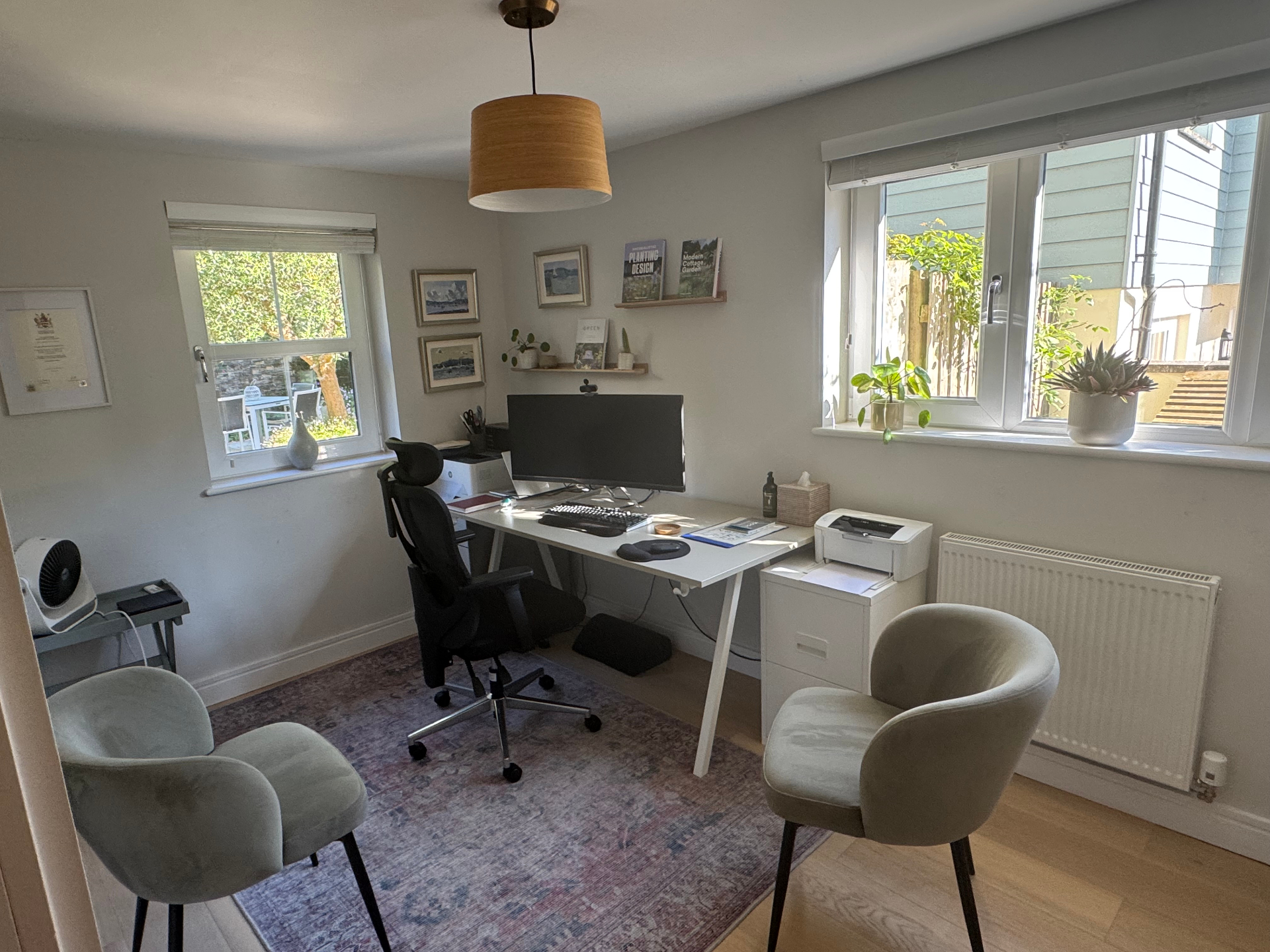
Sessions take place in a quiet, comfortable home office - or in your own home, or online, whichever works best for you and your family. The pace is getting to know you as a person: what you were doing before your stroke or injury, the people and activities that matter most, and the everyday moments you want to rebuild. Family members, partners or carers are warmly welcomed and often play a central role, particularly when working on conversation, memory or swallowing.
A typical session blends specialist therapy tasks - language exercises, speech practice, cognitive-communication work or targeted swallowing rehabilitation - with real-life practice such as ordering a coffee, telling a story, making a phone call or reading a favourite book. Visual supports, apps and written prompts are used where helpful, and progress is measured in small, meaningful steps. Sessions typically last around 45 minutes to an hour, and you will always leave with clear, achievable things to try between visits.
Continuing your progress
What happens after the programme?
By the end of a block of rehabilitation, many people notice tangible changes - finding words more easily, holding a conversation for longer, speaking with greater clarity or eating and drinking more safely and confidently. Just as importantly, families often describe a return of the person they know: humour, opinions, stories and the small everyday exchanges that connect them. These gains are the product of consistent practice and the brain's remarkable capacity to rewire (neuroplasticity), which continues months and years after injury.
Therapy does not end abruptly. You will leave with a personalised home programme, clear strategies for family and carers, and a plan for maintaining and building on your progress. Many people choose to return for follow-up blocks around key life moments - a return to work, a family event, a change in health, or simply when new goals emerge. Claire also liaises closely with GPs, community teams, case managers and other therapists to make sure the support around you is joined-up and sustained for the long term.
Voices from clients & families
Feedback from sessions
“Claire Eckersley has been giving my brother speech therapy since 2017. My brother lost much of his ability to speak following a stroke in 2016. Claire has been brilliant for him - extremely professional, skilled and knowledgeable. She is flexible and adaptable and has tailored his treatment to his needs and his personality. With her help and encouragement he has made progress and absorbed strategies to deal with his frustration. I unreservedly recommend her.”
J.C.
Sibling of client
“I have aphasia, after having a stroke at the age of 39. Very quickly, I realised what a huge difference Claire was already making in my life. She has always given me a safe haven to not be scared of trying, and our sessions are often full of emotion and laughter. One of the things I really wanted to do was read to my young son - slowly, after all the hard work, I can now do it. She shows me that I can learn, grow and thrive.”
Client L.L.
Stroke survivor
Further reading
Additional information
Where else to find information
The Stroke Association, Headway (the brain injury association) and the Royal College of Speech and Language Therapists offer trusted information about recovery, rehabilitation and support for individuals and families after stroke or traumatic brain injury.
Working with your wider team
Claire regularly works alongside GPs, community neuro-rehab teams, case managers, physiotherapists, occupational therapists and family members - making sure the support around you is joined-up, consistent and shaped by your goals. She is experienced in case-managed contexts and can provide clear, evidence-based reports where needed.
Discuss multidisciplinary supportInterested in starting neurological rehabilitation?
Get in touch to discuss whether specialist speech and language therapy could support your recovery after stroke or brain injury, and to arrange an initial assessment.
Frequently asked questions